Rather than trying to convince you to get an AI receptionist just because, let’s break down the main reasons medical practices use these solutions.
There’s no point setting up an AI receptionist, only to realise it wasn’t built to suit your use case: here’s how to decide whether an AI receptionist is worth it for you in 2026.
3 reasons AI receptionists may be worth it for you
- You need 24/7 phone availability
- You get a lot of routine enquiries
- You want to simplify booking management
Let’s explore the main ways AI receptionists can help solve these three problems.
1. You need 24/7 phone availability
Nobody likes starting their day with a backlog of emails and phone calls, but for front desk teams, this is a given.
After-hours demand can snowball into your list of tasks for the following day … draining your staff’s mental energy before they’ve even finished their first coffee. Throw a public holiday or two in the mix and the chaos compounds even more.
This is where an AI receptionist could be worth it: it’s designed for practices that need 24/7 systems available to patients. Too often, GP clinics absorb the volume of calls and end up playing a game of constant catch-up.
AI receptionists can give you a clean slate: every single day.

If your clinic receives a lot of after-hours calls, an AI receptionist can help handle these.
2. You get a lot of routine enquiries
Some practices get a higher volume of routine enquiries, for a few key reasons.
Maybe you need to update your website or Google profile with opening hours but can’t find the time. Or, perhaps you service a community where digital literacy is lower, meaning patients don’t know how to self-serve.
Instead, they ring you; that’s how you end up explaining where to find parking nearby, while an in-person patient waits for you to get off the phone, growing increasingly frustrated by the minute.
An AI receptionist could be worth it if you find yourself answering a lot of routine queries and wondering if there’s a better way.

An AI receptionist can deal with routine queries, reducing wait times for patients in person and over the phone.
3. You want to simplify booking management
Bookings are the core of any practice: when a doctor is sick or a few consecutive appointments run later than they’re meant to, the impact can last for hours and days.
Even when bookings are running smoothly, the process of manually creating and updating appointments takes up time you don’t have. Patient recalls and appointment reminders compound administrative workload even more.
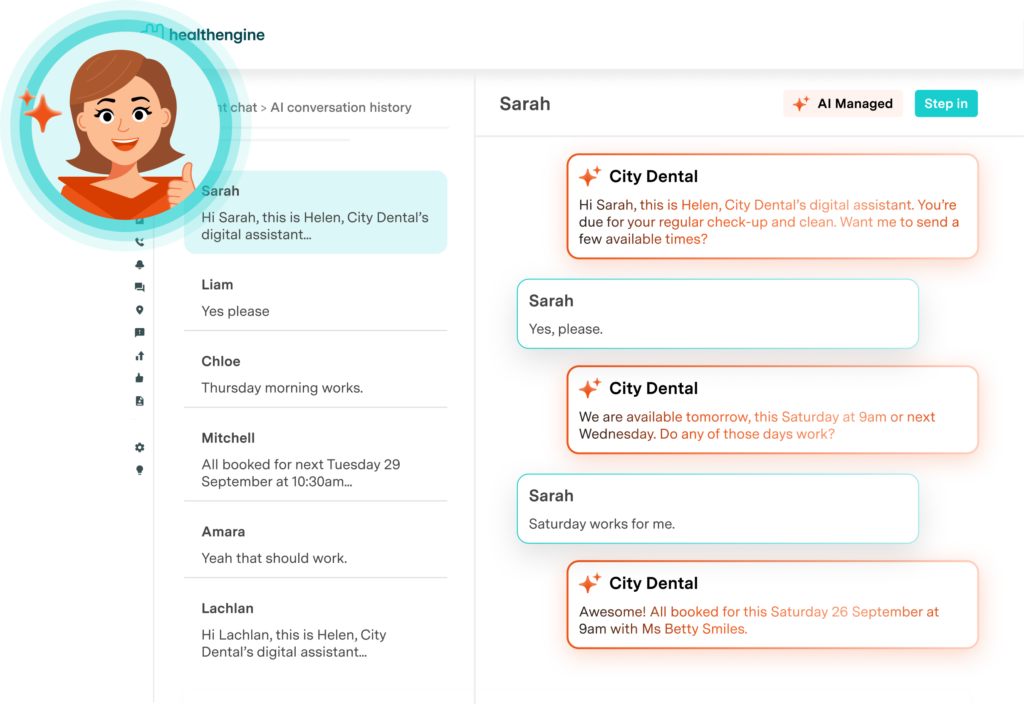
Here’s where AI receptionists can help: they fit into your existing workflow, managing booking changes within a clear set of guardrails.
Complex bookings go to your team while simple requests go through Helen.
The verdict: Are AI receptionists worth it? What to weigh up
AI receptionists could be a good solution if your main problem is missed calls, long hold times during peaks, after-hours demand or complexity managing bookings.
The best medical AI receptionists empower teams to handle the issues that need a human touch, while seamlessly handling tasks that require lower cognitive effort.
Some solutions (like Healthengine’s Helen) even come with personalised customer support, so you can onboard your new system in a way that works for you.