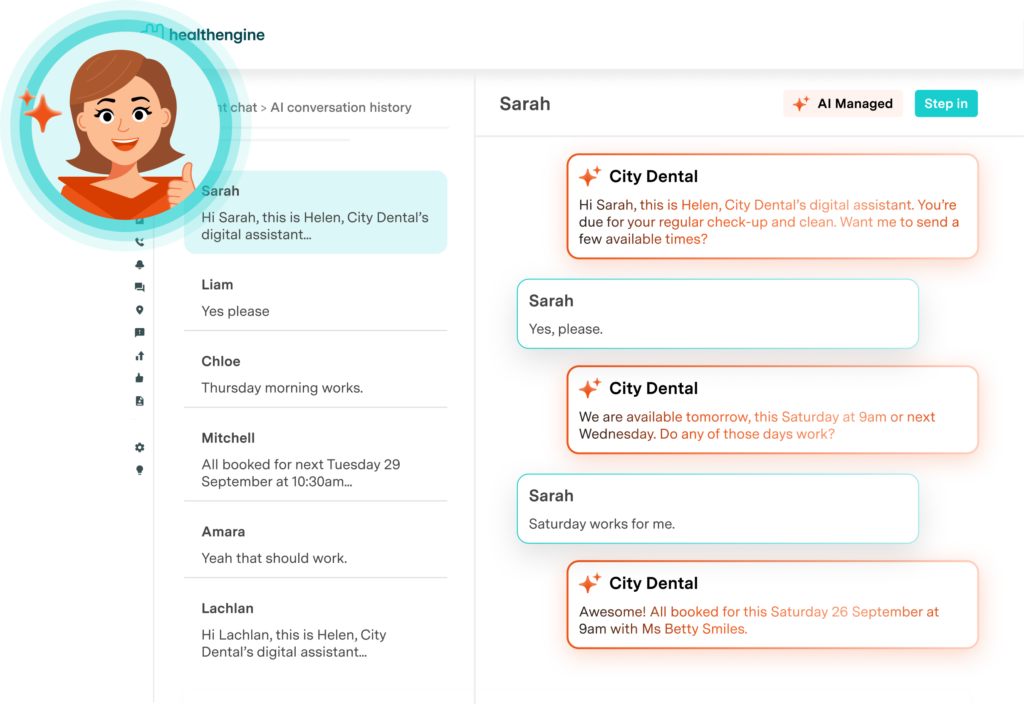
Does your clinic receive hundreds of calls every day, mostly relating to bookings? After trialling one AI receptionist and finding it didn’t meet their needs, here’s why this GP clinic adopted Healthengine’s AI receptionist, Helen, and never looked back.
‘It was physically not possible to answer all the calls’: Why this practice manager needed a better solution
Your typical Australian GP clinic is full of familiar sights and sounds: it’s the glossy magazines you put out to keep patients busy in the waiting room.
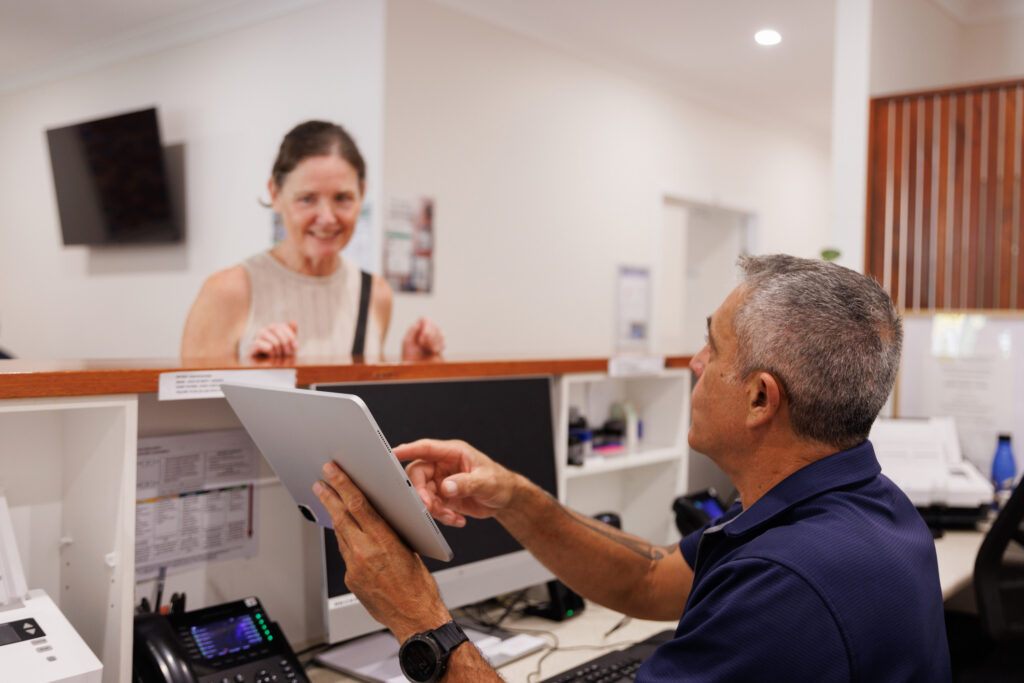
It’s the frantic tapping of receptionists’ keyboards as they send emails and process documents, all while speaking to patients in person.
But more than anything else, it’s the phones. Ringing for what seems like every minute of every day. And no matter how often you answer calls and try to get ahead, you can never seem to win the battle.
One practice manager in Dandenong knew this reality all too well: with a roster of 28 doctors to schedule appointments for, she also had nurses, receptionists and administrative staff under her supervision.
She describes the clinic’s patient volume as “significant”. The practice is open 7 days a week from 8am to 10pm, with most of their patients preferring to book over the phone due to language barriers and hesitation using digital systems.
The practice manager says it was “physically not possible to answer all the calls”.
Hiring more staff to answer phones wasn’t feasible—which led her to explore the idea of an AI receptionist.
Finding the right AI receptionist for the practice
Ultimately, Healthengine’s AI receptionist was the solution this practice manager chose, but Helen wasn’t the first.
The practice manager initially tried a different AI receptionist. Rather than making bookings simpler, however, it only added complexity.
Despite having 12 to 15 doctors rostered on any given day, patients were only ever offered the same 5 doctors—even if more were available. After trying to address this problem to no avail, the practice manager decided to keep comparing AI receptionists.
Enter Helen.
How Helen improved the patient and provider experience
For patients, the experience improved immediately after switching Helen on.
The practice manager recalls that even the installation process was unexpectedly simple: “My expectation was that [the set-up] wouldn’t be easy, because of the previous supplier we dealt with.”
Helen became the first point of contact for all patients who, once on the phone, could choose to be transferred to reception instead.
“It’s quicker for patients,” says the practice manager. “They’re not hanging onto the phone and the basic questions are answered … she takes a lot of routine work for the staff.”
Helen’s features also include a dashboard, where practices can track the impact of their AI receptionist in real-time.
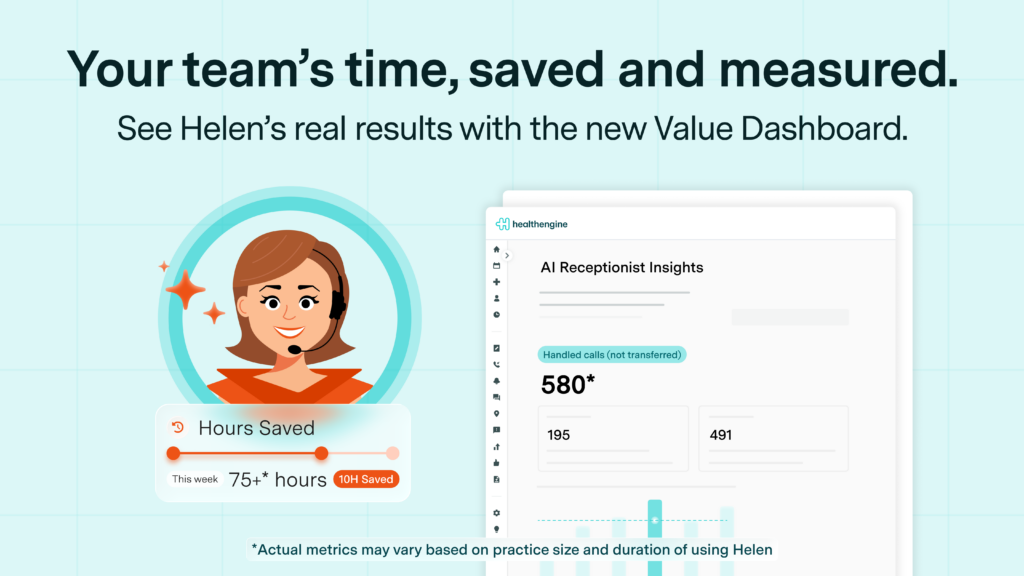
This practice manager now has a daily view of the number of calls answered; minutes spent with Helen; and how many calls get returned to reception.
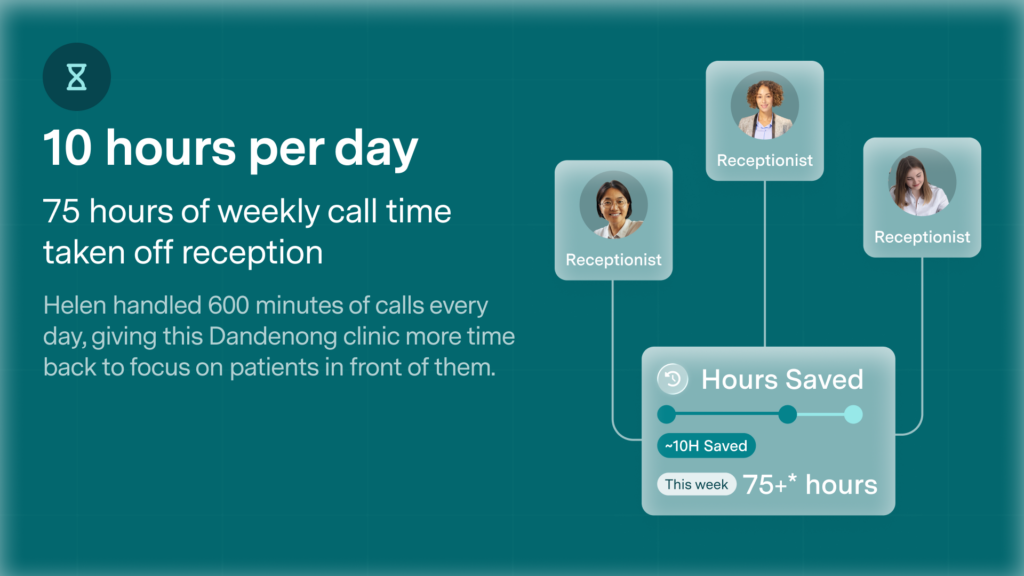
She now knows, for example, that Helen handles about 75 hours of calls per week. “I can see patterns: it’s good to have this in terms of data,” she says.
It supports her decision-making while allocating shifts and rosters, leading to less overwhelm and greater efficiency for the practice.
Not all AI receptionists are built the same: Try Helen today
Helen, Healthengine’s AI receptionist, was created in consultation with real GPs nationwide.
Here are a few of the features front desk teams love:
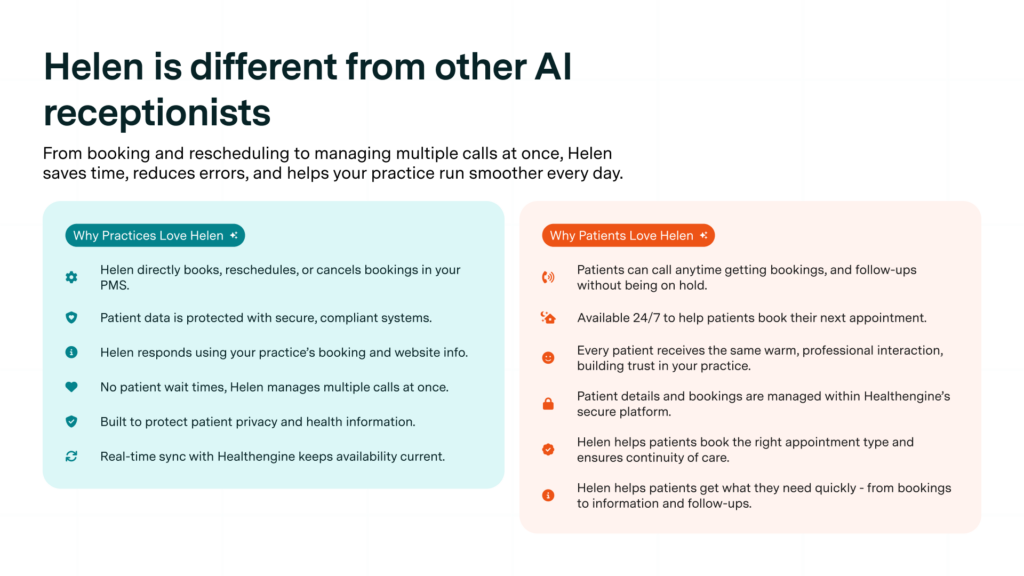
- 24/7 phone coverage: Helen answers every call within three rings and can take multiple calls at once.
- Smart call routing: Helen stays in her lane, identifying urgent or complex cases that require a human touch.
- Simple appointment management: Helen can reschedule or cancel appointments for existing patients, keeping your books up-to-date overnight and during peak times.
If you’re a general practitioner looking to make day-to-day admin simpler, book your free demo with Helen to get started.